

Legislative Landscape
T-21 Days Until the Expiration of the ACA eAPTCs: On Thursday, the Senate is expected to vote on a proposal from Democrats that would extend the expiring Affordable Care Act enhanced premium tax credits (eAPTCs) for three years. As of today, the bill does not have enough support to pass in the Senate.
Ahead of the floor vote, Senate Finance Committee Chairman Mike Crapo (R-ID) and Senate Health, Education, Labor and Pension Committee Chairman Bill Cassidy (R-LA) introduced the Health Care Freedom For Patients Act. Their bill would redirect funds from insurance companies to patients via Health Savings Accounts (HSAs) paired with bronze or catastrophic plans on Obamacare exchanges in 2026-2027. This approach would provide $1,000 to eligible individuals and $1,500 to those ages 50 to 64 earning under 700% of the federal poverty level, with certain restrictions. The bill also would expand catastrophic plan eligibility to all consumers from Jan. 1, 2027, reduce federal Medicaid funding to states covering undocumented immigrants, mandate citizenship verification for Medicaid and prohibit federal Medicaid funds or essential health benefits for gender transition services. On Tuesday, Senate Majority Leader John Thune (R-SD) announced that Senate Republicans will also vote on the Cassidy-Crapo proposal in addition to the Democratic plan. Some Republicans will reportedly attempt to pass their own proposals by unanimous consent.
In the House, a group of 35 House members, led by Reps. Jen Kiggans (R-VA) and Josh Gottheimer (D-NJ), introduced a bipartisan framework to extend the expiring eAPTCs for one year with new income eligibility restrictions and an extended open enrollment period to March 19. The lawmakers also wrote a letter to Majority Leader Thune, Senate Minority Leader Chuck Schumer (D-NY), Speaker of the House Mike Johnson (R-LA) and House Minority Leader Hakeem Jeffries (D-NY) asking them to review and consider their framework for a floor vote by Dec. 18.
House W&M Subcommittee Holds Hearing on International Tax Policy: On Dec. 3, the House Ways and Means Tax Subcommittee held a hearing titled “Promoting Global Competitiveness for American Workers and Businesses.” Democrats focused on trade policy and Republicans focused on the TCJA and Working Families Tax Cuts Act (WFTCA/OBBBA, P.L. 119-21). A number of the noteworthy topics were discussed, including Rep. Carol Miller’s (R-WV) question on reducing burdens and complexity in international tax. Professor Bret Wells of the University of Houston Law Center said there’s an opportunity to review the U.S. Subpart F regime and that it should be limited to ensure a normal corporate tax on the provision of goods and services from foreign affiliates. He added that active business income earned in foreign jurisdictions should be subject to the net CFC tested income rules (formerly the global intangible low tax income (GILTI) rules). Rep. Nathaniel Moran (R-TX) also asked about improving the base erosion anti-abuse tax (BEAT) without discouraging IP repatriation by U.S. companies.
Warren, Beyer Send Letter to Bessent on Retroactive R&E Exception under CAMT: On Dec. 4, Sen. Elizabeth Warren (D-MA) and Rep. Don Beyer (D-VA) sent a letter to Treasury Secretary Scott Bessent and Assistant Secretary for Tax Policy Ken Kies expressing concern about a potential retroactive research and experimentation (R&E) exception from the corporate alternative minimum tax (CAMT). The lawmakers argue that it could create a new tax preference for large corporations, weaken CAMT’s role in ensuring a 15% minimum tax on reported financial income, increase fiscal costs and undermine congressional intent. They are requesting detailed information on whether the Treasury Department intends to allow a retroactive R&E exception, how such an action would be justified under existing law and congressional intent and the revenue and distributional effects of such a potential exception. They are also seeking information on communications with corporate stakeholders and the timeline and process for any related guidance or regulations.
Reps. Mike Thompson (D-CA), Danny Davis (D-IL), Linda Sanchez (D-CA) and Jimmy Gomez (D-CA) and Sens. Bernie Sanders (I-VT), Sheldon Whitehouse (D-RI) and Chris Van Hollen (D-MD) co-signed the letter.
Cantwell, Blackburn Introduce the HUSTLE Act: On Dec. 8, Sens. Maria Cantwell (D-WA) and Marsha Blackburn (R-TN) introduced the Helping Undergraduate Students Thrive with Long-Term Earnings or HUSTLE Act. The bill would protect college athletes’ name, image, and likeness (NIL) earnings and create tax-advantaged NIL investment accounts. Distributions would be taxed as ordinary income before graduation and as long-term capital gains after graduation. Penalties would be applicable to early or excess withdrawals, except for qualified uses like education or medical expenses. The bill also would allow up to $35,000 to roll over to an IRA after the student leaves college sports and require trustees to provide annual financial education to the student account owner.
Daines, Miller Chain Crypto Tax Bill Expectations to 2026: Last week, Sen. Steve Daines (R-MT) and Rep. Max Miller (R-OH) indicated that crypto tax legislation will be delayed until next year. Despite recent hearings and growing interest in clarifying digital asset tax rules, the delay was due to the October government shutdown that consumed nearly two months of legislative time. Rep. Miller said he expects to develop a bipartisan framework by the August recess that could include a de minimis exclusion for small crypto transactions and new rules for taxing staking rewards. The legislation would build on existing Internal Revenue Service (IRS) guidance that currently treats cryptocurrency as property and staking rewards as taxable upon receipt.
LaHood, Sanchez Reintroduce Retirement Rollover Flexibility Act: On Dec. 4, Reps. Darin LaHood (R-IL) and Linda Sanchez (D-CA) reintroduced H.R. 6450, the Retirement Rollover Flexibility Act. The bill would allow individuals to roll over funds from a Roth IRA directly into a designated Roth account within an employer-sponsored retirement plan such as a 401(k) or 403(b). Under current law, workers cannot roll over Roth IRA funds into employer-sponsored retirement plans, leaving many people stuck with managing several small accounts that rack up extra fees and frequently lead to early withdrawals.
In the Senate, Sens. John Barrasso (R-WY) and Michael Bennet (D-CO) introduced the companion bill, S. 3352.

Tax Worldview
Chairman Smith Issues Warning for OECD and G7 Countries: During the House Ways and Mean Tax Subcommittee hearing last week on international tax (see above), Chairman Jason Smith (R-MO) discussed ongoing Pillar II negotiations on the U.S. proposed side-by-side approach and said he expected to see the technical work of the negotiations completed as soon as possible. Chairman Smith warned the G7 countries against delaying a potential agreement on a global tax deal, with a clear reference to the joint understanding from June that resulted in the removal of the proposed Section 899 provision from negotiations from the One Big Beautiful Bill Act (OBBBA).
IRS Issues Initial Guidance on OBBBA International Tax Provisions: On Dec. 4, the IRS and Treasury Department issued Notices 2025-75, 2025-77 and 2025-78 previewing proposed regulations on the OBBBA international tax transition rules. Notice 2025-75 covers modified subpart F pro rata share rules for CFC dividends paid on or before June 28, 2025. Notice 2025-77 clarifies the 10% foreign tax credit disallowance under section 960(d)(4) for taxes on section 959(a) distributions of section 951A. Notice 2025-78 addresses the new foreign-derived deduction-eligible income regime excluding gains after June 16 outbound sales of intellectual property or depreciable property (adopting the definitions of intangibles under section 367(d)(4), excluding leases and licenses).
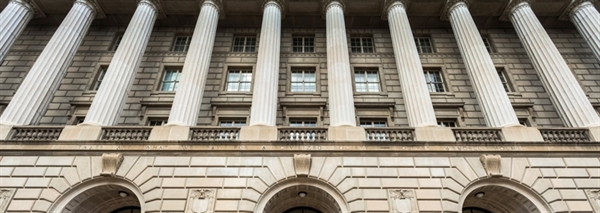
1111 Constitution Avenue
IRS Issues Guidance on Trump Accounts: On Dec. 2, the IRS issued Notice 2025-68, announcing its intent to issue upcoming regulations on Trump Accounts, a new type of tax-advantaged individual retirement account (IRA) for eligible children under 18 established under the OBBBA. The accounts will include a one-time $1,000 federal pilot contribution for U.S. citizen newborns from Jan. 1, 2025, to Dec. 31, 2028. Accounts are intended to open early next year and families or others can contribute up to $5,000 annually. Employers can contribute up to $2,500 tax-free per employee (counting toward the limit) and certain governments and charities may add qualified general contributions.
The IRS also released draft Form 4547 (Trump Account Election(s)) and instructions for electing into the Trump Accounts program for eligible children. Elections for 2026 are expected to be made by filing the new form or through the online portal at trumpaccounts.gov, which is expected to be available by mid-2026.
IRS Issues Guidance on 403(b) Plans: On Dec. 3, the IRS issued Notice 2025-60 announcing the 2025 Required Amendments List (RA List) for qualified 401(a) plans, 403(b) plans and preapproved interim amendments. The guidance sets Dec. 31, 2027, as the general deadline to amend nongovernmental plans (later for governmental or union plans). The list has Part A (RMD rule updates affecting most plans), Part B (partnership/trust attribution changes under section 414(c) for unusual plans) and no Part C items but aligns with SECURE 2.0 deadlines through 2026‒2029.

At a Glance
Right-Leaning Organizations File Brief Challenging 501(c)(3) Donor Disclosure Rule: Last week, a group of 140 right-leaning organizations and individuals with the Advancing American Freedom advocacy group argued in a Sixth Circuit brief that IRS rules under Section 6033(b)(5) requiring nonprofits to disclose major contributors to the Treasury Department violate First Amendment free association rights. They also argue that it warrants heightened “exacting scrutiny,” similar to the 2021 ruling in Americans for Prosperity Foundation v. Bonta striking down similar California donor disclosure. The brief warns of data breaches and harassment risks while rejecting IRS claims of mere administrative need.
Auchincloss, Goodlander Introduce the Education Not Endless Scrolling Act: Last week. Reps. Jake Auchincloss (D-MA) and Maggie Goodlander (D-NH) introduced H.R. 6335, the Education Not Endless Scrolling Act. The bill would impose a 50% excise tax for companies that collect digital advertising revenue and redirect it towards a tutoring trust fund, technical education support and a local journalism preservation trust fund.
Lawmakers Introduce Bills Addressing Natural Disasters: On Dec. 5, Reps. Kevin Mullin (D-CA) and Maria Elvira Salazar (R-FL) introduced H.R. 6473, the Facilitating Increased Resilience, Environmental Weatherization and Lowered Liability (FIREWALL) Act. The bill would create a refundable tax credit covering 50% of qualified disaster prevention expenses up to $25,000 to encourage home-hardening upgrades like fire-resistant materials, stormwater systems, backup generators, floodproofing and seismic reinforcements in Federal Emergency Management Agency (FEMA)-designated high-risk or recently disaster-impacted areas.
Sens. Alex Padilla (D-CA), Tim Sheehy (R-MT), Cynthia Lummis (R-WY) and Ron Wyden (D-OR) also introduced the Protect Innocent Victims of Taxation After Fire Extension Act. The bill would make the Federal Disaster Tax Relief Act (P.L. 118-148) permanent, which allows for wildfire-related settlement payments to be excluded from federal income taxes. Instead of amending previous tax returns, the bill would allow victims to claim the exemption in the year they receive payments.
Reps. Doug LaMalfa (R-CA) and Mike Thompson (D-CA) introduced the House companion on Sept. 9 with Reps. Brad Sherman (D-CA), Tom McClintock (R-CA), Janelle Bynum (D-OR) and Cliff Bentz (R-OR).
Hearings and Events
House Ways and Means Committee
The House Ways and Means Committee held a markup on Wednesday, Dec. 10 on several bills including H.R. 6500 the AGOA Extension Act, H.R. 6506, the Taxpayer Due Process Enhancement Act, H.R. 6495, the Taxpayer Notification and Privacy Act and H.R. 4242, the Innovate Less Lethal to De-Escalate Tax Modernization Act.
Senate Finance Committee
The Senate Finance Committee does not have any hearings scheduled for this week.