

Tax Worldview
OECD Announces Pillar Two Agreement: On Monday, the Organisation of Economic Co-operation and Development (OECD) announced a “Side-by-Side package” under the Pillar Two global minimum tax regime that reflects the June 2025 framework between the United States and the G-7. Critically, the package establishes a safe harbor under which U.S.-headquartered groups can elect to be exempted from the global minimum tax’s income inclusion rule and undertaxed profits rules, provided certain conditions are met. The package introduces several GLOBE simplifications and safeguards, including a Simplified ETR safe harbor, new safe harbors for eligible substance-based tax incentives and jurisdictions under the side‑by‑side system and an evidence‑based “stocktake” process to maintain a level playing field across Inclusive Framework Members.
The new framework applies for fiscal years beginning on or after Jan. 1, 2026, while the package extends the transitional country-by-country reporting safe harbor to fiscal years beginning on or before 2027.

Legislative Landscape
Senate Confirms Theurer in En Bloc Package: Before Congress adjourned for the holiday recess, the Senate confirmed Derek Theurer to be deputy undersecretary for legislative affairs as part of an en bloc package of 89 nominees. He will be responsible for acting as the liaison between the Treasury Department and Congress to address any issues that lawmakers may have. He will also continue to perform the duties of deputy treasury secretary.
Krishnamoorthi, Warner Introduce the Investing in American Workers Act: On Dec. 16, Rep. Raja Krishnamoorthi (D-IL) and Sen. Mark Warner (D-VA) introduced companion versions of the Investing in American Workers Act. The bill would create a 20% tax credit for employers increasing spending on training for certain employees, prioritizing programs such as registered apprenticeships and credential-leading initiatives. It would also incentivize small businesses and tax-exempt entities to utilize the credit by allowing it to be applied against payroll taxes.
Miller, Horsford Unveil Draft of the Digital Asset PARITY Act: On Dec. 20, Reps. Max Miller (R-OH) and Steven Horsford (D-NV) released a draft of the Digital Asset Protection, Accountability, Regulation, Innovation, Taxation and Yields (PARITY) Act. The draft bill would treat regulated dollar-pegged stablecoins as cash equivalents and proposes a $200 per transaction de minimis rule. It also would align digital assets with securities by applying the wash-sale and constructive sale rules, permit the mark-to-market election for dealers/traders of digital assets and extend securities-lending principles to digital assets, among other provisions. Additionally, the draft bill would address phantom income of miners/stakers and clarify that passive-fund staking does not qualify as a trade or business.
Lawmakers Send Letter to Bessent on Staking Treatment: On Dec.18, Rep. Mike Carey (R-OH) led a letter to Acting Internal Revenue Service (IRS) Commissioner and Treasury Secretary Scott Bessent urging him to review the application of Revenue Ruling 2023-14 to cryptocurrency staking rewards. The lawmakers contend that stakers should be treated as first owners of newly created property and taxed only upon sale, rather than upon receipt. They also stressed that the current guidance is burdensome and misaligned with tax principles, and they requested updated guidance along with answers to questions about the IRS’ analysis, policy rationale, administrative barriers and plans for revisions.
Ossoff, Hyde-Smith Introduce the Support Small Business Growth Act: On Dec. 16, Sens. Jon Ossoff (D-GA) and Cindy Hyde-Smith (R-MS) introduced the Support Small Business Growth Act. The bill would create a new payroll tax deduction for small businesses with less than 15 employees. The deduction would phase out beginning in tax year 2028 and fully expire in 2033.
Justice, Warner Introduce the Child Care Supply Tax Credit Act: On Dec. 18, Sens. Jim Justice (R-WV) and Mark Warner (D-VA) introduced the Child Care Supply Tax Credit. The bill would create a refundable tax credit to licensed child care facilities serving at least six children, covering wages paid to direct-care workers (excluding supervisors and directors), with nonprofits eligible via a direct-pay option.

Energy-Tax Mainlines
IRS Provides Safe Harbor for Carbon Capture Verification Standards: On Dec. 19, 2025, the IRS issued Notice 2026-01, which provides a safe harbor for eligibility determinations for taxpayers claiming the Section 45Q Carbon Capture and Sequestration credit. The guidance allows sequestration data to be verified by an independent engineer or geologist beginning in tax year 2025 to ensure continued compliance until a long-term solution replaces the greenhouse gas reporting framework. The change follows the Environmental Protection Agency (EPA)’s September proposal to terminate its Greenhouse Gas Reporting Program (GHGRP) for industrial facilities. Current regulations require section 45Q credit claimants to use for verification of sequestration volumes.
Residential Clean Energy Credits Expire: On Dec. 31, the section 25C energy-efficient home improvement credit and section 25D residential clean energy credit expired under the accelerated termination adopted by the One Big Beautiful Bill Act (OBBBA, Public Law 119-21). The section 25C credit allowed taxpayers to claim a 30% credit for qualified energy efficient improvements, residential energy property or home energy audits not exceeding $1,200 annually. A separate $2,000 annual limit applied for heat pumps, heat pump water heaters and biomass stoves and boilers. The section 25D credit allowed taxpayers to claim a credit for residential solar electric generating and heating property, small wind energy property, geothermal heat and battery property. Both credits were terminated for property placed in service after Dec. 31, 2025.
W&M Committee Democrats Introduce the American Affordability Act: On Dec. 18, the House Ways and Means Committee Democrats introduced the American Affordability Act. The bill covers housing, child care, education, health care, and labor issues. It also addresses energy and transportation costs by restoring the following credits to their pre-OBBBA status:
- Section 25D Clean Energy Home Improvement Credit
- Section 45Y and 48E Investment and Production Tax Credits
- Section 45X Advanced Manufacturing Production Credit
- Section 45V Hydrogen Production Credit
- Section 48C Advanced Energy Project Credit Program
- Section 30D Clean Vehicle Credit
- Section 45Z Clean Fuels Production Credit
- Section 179D New Energy Efficient Commercial Buildings Deduction
- Section 168 Cost Recovery for Property
- Section 25E Previously Owned Clean Vehicle Credit
- Section 45W Qualified Commercial Clean Vehicle Credit
- Section 30C Alternative Fuel Vehicle Refueling Property Credit
Maloy Introduces the Geothermal Tax Parity Act: On Dec. 18, Reps. Celeste Maloy (R-UT), Blake Moore (R-UT), Steven Horsford (D-NV) and Russ Fulcher (R-ID) introduced the Geothermal Tax Parity Act. The bill would allow amortization of geological and geophysical expenditures for geothermal exploration or development and creates an exception to passive loss limitations for geothermal projects.
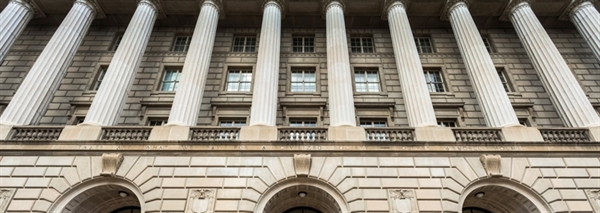
1111 Constitution Avenue
IRS Issues Guidance on Auto Loan Interest Deduction: On Dec. 31, the IRS issued proposed regulations regarding the auto loan interest deduction. The rule addresses information reporting requirements for lenders, identifies eligible taxpayers and loans, and guidelines for determining final assembly.
Qualifying vehicles must be “new” to the taxpayer (original use starts with the purchase), built mainly for roads and highways (not rails or off-road only), and have their final assembly in the United States, which taxpayers can check via the vehicle’s ID number (VIN) details or the label on the car showing the assembly location. Only individuals, estates and certain trusts can claim the deduction, which is subject to phase-out limitations.
Qualifying loans must be taken out after Dec. 31, 2024, secured by a first lien on the qualifying vehicle and used to buy the car plus typical add-ons like sales tax, registration fees or service plans, but not insurance or “negative equity” from trading in an old car loan. The deduction does not apply to loans to finance boats or trailers. Additionally, deductible interest on refinanced loans is capped at the original loan’s remaining balance. To qualify as “personal use,” the taxpayer must expect to use the financed vehicle for more than half the time for individual, rather than business, purposes.
Lenders receiving more than $600 in interest annually from a qualifying loan must report the details to the IRS and send taxpayers a statement noting that not all interest may be deductible. The lender would be required to file an information return for each borrower, reporting items such as the borrower’s name and address, total interest received, outstanding principal at the start of the year, loan origination date and the vehicle’s VIN, year, make and model. The guidance incorporates existing penalty frameworks for failures to file or furnish required information returns and payee statements.
Public comments on the proposed regulations are due by Feb. 2, 2026, and a public hearing has been scheduled for Feb. 24, 2026.
IRS Releases Updated FAQs on Section 163(j): On Dec. 23, the IRS updated the frequently asked questions in Fact Sheet 2025-09 regarding the limitation on the deduction of business interest expenses (Section 163(j)) under the One Big Beautiful Bill Act (OBBBA). The updated FAQs address gross receipts tests, floor plan financing interest expenses, the adjusted taxable income (ATI) limitation calculation and other OBBBA changes.
Importantly, the FAQs note that for taxable years beginning after Dec. 31, 2024, the ATI limitation will again be based on earnings before interest, taxes, depreciation and amortization (EBITDA).
The updates also clarify that small businesses with average annual gross receipts of $31 million or less for 2025 are exempt, even if the prior-year’s additional interest carries forward. The FAQs define business interest expense as interest allocable to non-excepted trades or businesses (excluding employee services, electing real property/farming businesses and utilities). It also includes loans to finance trailers/campers held for sale or lease for taxable years after Dec. 31. 2024.
Warnock, Wyden Lead Letter to Bessent on TAS Operations: On Dec. 18, Senate Finance Committee Ranking Member Ron Wyden (D-OR) and Sen. Raphael Warnock (D-GA) sent a letter to Acting IRS Commissioner and Treasury Secretary Scott Bessent regarding workforce reductions and operational strains at the Taxpayer Advocate Service (TAS). The lawmakers urged Secretary Bessent to lift the IRS hiring freeze to address severe staffing shortages that are threatening taxpayer assistance ahead of the 2026 filing season. The letter highlights how nearly one in four TAS advocates have left the agency due to deferred resignations and workforce reductions, exacerbating caseloads, delays and service vulnerabilities. The senators requested a response detailing criteria for deeming hires as in the “national interest,” current caseloads, wait times, prioritization plans and steps to resolve backlogs of cases such as those involving identity theft.
Warren, King Send Letter to Bessent on 2026 Filing Season: On Dec. 23, Sens. Elizabeth Warren (D-MA), Angus King (I-ME) and 13 of their Senate colleagues sent a letter to Treasury Secretary Bessent and IRS Chief of Taxpayer Services Ken Corbin about the 2026 filing season. The lawmakers expressed concerns that IRS staffing shortages from deferred resignations and hiring freezes will worsen taxpayer service delays, heighten error risks from One Big Beautiful Bill Act (OBBBA) changes and create processing backlogs during the 2026 filing season. They requested detailed plans by Jan. 15 detailing taxpayer-support measures, including call center staffing levels, refund processing timelines, audit capacity and strategies to mitigate anticipated service disruptions.
DelBene, Moore Send Letter to Bessent on IRS AI Use: Reps. Suzan DelBene (D-OR) and Gwen Moore (D-WI), both members of the House Ways and Means Committee, sent a letter to Treasury Secretary Bessent regarding the use of artificial intelligence (AI) at the IRS. The lawmakers raised concerns about using AI to generate code for interacting with current IRS systems managing sensitive taxpayer data. They also asked about accuracy risks of AI-generated code, prior analysis conducted, current and planned deployments, governance protocols, human oversight processes and third-party contractor involvement.
At a Glance
Cassidy, Klobuchar Introduce the Working Families Disaster Tax Relief Act: On Dec. 18, Sens. Bill Cassidy (R-LA) and Amy Klobuchar (D-MN) introduced the Working Families Disaster Tax Relief Act. The bill would allow disaster-affected taxpayers to elect using their preceding taxable year’s earned income to determine eligibility for the Earned Income Credit (EIC) and the refundable portion of the Child Tax Credit (CTC). This bill would be effective for taxable years beginning after Dec. 31, 2024.
Hearings and Events
House Ways and Means Committee
The House Ways and Means Committee does not have any hearings scheduled for this week.
Senate Finance Committee
The Senate Finance Committee does not have any hearings scheduled for this week.