

2025’s Tax-Writers
On Dec. 20, incoming Senate Majority Leader John Thune (R-SD) announced the Senate Republican Conference’s committee assignments, with incoming Senate Minority Leader Chuck Schumer (D-NY) following suit on Jan. 2 with the Senate Democratic Caucus’ committee assignments. Below are brief profiles of the new members of the Senate Finance Committee—one Republican and five Democrats.
Sen. Roger Marshall (R-KS)
Roger Marshall has served as the junior senator from the state of Kansas since January 2021. He was first elected to Congress as a representative for Kansas’ 1st congressional district, a seat he held from 2017 to 2021. Prior to serving in Congress, he was a captain in the United States Army Reserve and a practicing obstetrician.
Sen. Marshall has been active on issues concerning biofuels and Inflation Reduction Act (IRA, Pub. L. 117-169) tax credits, speaking in an interview that he supports legislation to limit the Section 45Z Clean Fuel production credit to fuels derived from domestically sourced feedstocks. He introduced the Farmer First Fuel Incentives Act (S. 5145) in the 118th Congress, which would prohibit foreign feedstocks from qualifying for the Section 45Z credit. Sen. Marshall also supports education-tax reform initiatives, introducing the American Workforce Empowerment Act (S. 2921), which would expand the scope of tax-preferred 529 savings plans to cover certain training and apprenticeship programs.
Sen. Ben Ray Lujan (D-NM)
Ben Ray Lujan has served as the junior senator from the state of New Mexico since January 2021. He was first elected to Congress as a representative from New Mexico’s 3rd congressional district, a seat he held from 2009 to 2021. During his tenure in the House, he also served as chairman of the Democratic Congressional Campaign Committee from 2015 to 2019 and assistant speaker of the House from 2019 to 2021. Prior to serving in Congress, he served on the New Mexico Public Regulation Commission.
During his congressional tenure, Sen. Lujan has been active on education-tax issues, sponsoring the Save For Success Act (H.R. 2378), which would modify the American Opportunity Tax Credit (AOTC) to allow filers to claim up to a $250 AOTC credit for every year that money is saved in a qualifying child’s 529 account starting from birth, rather than restricting AOTC eligibility to college-age qualifying children. He also introduced a bill (S. 2230) that modifies the Section 45Q carbon oxide sequestration credit.
Sen. Bernie Sanders (I-VT)
Bernie Sanders has served as a senator from the state of Vermont since January 2007, becoming the state’s senior senator in 2023. He was first elected to Congress as a representative from Vermont’s at-large congressional district, a seat he held from 1991 to 2007. Prior to serving in Congress, he was a political activist and the mayor of Burlington, Vermont.
On Nov. 22, Sen. Sanders announced his intention to join the Senate Finance Committee, but committee assignments were not confirmed by Senate Democratic Leader Chuck Schumer (D-NY) until Jan. 2. Sen. Sanders is one of the most progressive members of the Senate Democratic Caucus on tax and economic issues, and he is expected to bring these views to the Finance Committee, saying in his November statement that he will use his position on the committee to “prioritize protecting Social Security, Medicare, and Medicaid from Republican attacks, and creating a fair tax system that finally forces the very wealthy to pay their fair share.” He has sponsored numerous bills in the Senate that would raise the tax liabilities of wealthy individuals and large corporations, including the Ending Corporate Greed Act (S. 4642), the Corporate Tax Dodging Prevention Act (S. 4098) and the Tax Excessive CEO Pay Act of 2024 (S. 3620).
Sen. Tina Smith (D-MN)
Tina Smith has served as the junior senator from the state of Minnesota since 2018, the start of her congressional career. Prior to serving in Congress, she was active in Minnesota state politics, serving as chief of staff to Gov. Mark Dayton in 2011 and as lieutenant governor from 2015–2018.
Over her Senate career, Sen. Smith has focused on workforce and small-business issues, introducing bills such as the 21st Century Workforce Partnerships Act (S. 1626), which establishes grant initiatives for career and technical education programs, and the Expanding Access to Capital for Rural Job Creators Act (S. 294), which would remove regulatory hurdles for rural small businesses trying to access capital to grow their businesses. Sen. Smith also sponsored the Tax Relief for Coerced Debt Act (S. 4801) to protect survivors of domestic abuse from taxes owed due to abusers who have taken out debt in victims’ names.
Sen. Raphael Warnock (D-GA)
Raphael Warnock has served as the junior senator from the state of Georgia since 2021, the start of his congressional career. While he had not held political office prior to being elected to the Senate, Warnock is a pastor at the influential Ebenezer Baptist Church in Atlanta.
During his Senate career, Sen. Warnock has been active in health care issues, including sponsoring the Medicaid Saves Lives Act (S. 2315) and the Bridge to Medicaid Act (S. 4684). As an original cosponsor of the Working Families Tax Relief Act (S. 1992), which would have made the Child Tax Credit and Earned Income Tax Credit provisions in the American Rescue Plan permanent, Sen. Warnock is a proponent of tax credits aimed at low- and middle-income individuals and families. In a statement released after his appointment to the Finance Committee, Sen. Warnock said he would guard “against any efforts to gut critical safety net programs like Social Security, Medicaid and Medicare,” and highlighted his work in expanding the Child Tax Credit.
Sen. Peter Welch (D-VT)
Peter Welch has served as the junior senator from the state of Vermont since 2023. He was first elected to Congress as an at-large representative from Vermont, a seat he held from 2007 to 2023. Prior to joining Congress, he was active in Vermont state politics, serving in the Vermont Senate, including as president pro tempore of the chamber.
In the House, Sen. Welch introduced the Electric CARS Act of 2021 (H.R. 1271) that made modifications to the Section 30D Clean Vehicle Credit to remove limitations on the number of vehicles per manufacturer that can qualify for the credit and also had a carryforward provision. He has also introduced various bills protecting aspects of Medicare, Medicaid and Social Security, and stated in a press release that he would primarily use his new position on the committee to protect these programs. He also said that he would “stand up against [President-elect] Trump’s proposed tariffs and tax giveaways to the wealthiest at the expense of working people.”

Legislative Lowdown
Johnson Reelected as Speaker; Shifts in Strategy for Reconciliation: On Jan. 3, the House reelected incumbent Speaker Mike Johnson (R-LA) on the first ballot in a tight party-line vote. Johnson’s victory came after several rounds of negotiation with members of the House Freedom Caucus, who initially withheld their support. The final tally was 218-215, with Rep. Thomas Massie (R-KY) being the only Republican dissenting vote. President-elect Donald Trump is reported to have weighed in personally to help secure Johnson’s reelection.
Johnson’s narrow reelection comes during negotiations between Republican leaders in both chambers of Congress and President-elect Donald Trump on whether to pursue a one-bill approach for the budget reconciliation process to extend the Trump tax cuts, and address border and energy issues, rather than a two-bill strategy that would have delayed the passage of a tax bill. A one-bill strategy generally has been supported by House Republicans, including Speaker Johnson and House Ways and Means Committee Chairman Jason Smith (R-MO), while a two-bill strategy has been supported by senior Trump advisors and Senate Republicans, including the new Senate majority leader, Sen. John Thune (R-SD). Earlier this week, the president-elect seemed to endorse passing “one powerful bill” for his priorities, but later told radio host Hugh Hewitt on Jan. 6 that while he would prefer one bill, he would be willing to pass two bills, saying that he’s “open to either way as soon as we get something passed as quickly as possible.”
Trump to Nominate Ken Kies as Treasury Assistant Secretary for Tax Policy: In a post on Truth Social on Jan. 3, President-elect Donald Trump announced his intention to nominate Ken Kies to be the Treasury Department’s assistant secretary for tax policy. Kies is a longtime Hill strategist, serving as chief Republican tax counsel for the House Ways and Means Committee and later as chief of staff for the Joint Committee on Taxation before starting his own tax lobbying firm, the Federal Policy Group. As assistant secretary for tax policy, Kies will be influential in determining policy proposals to be included in the expected tax bill later this year.
Trump’s announcement included other appointees for Treasury Department leadership positions, including Daniel Katz as chief of staff, Samantha Schwab as deputy chief of staff, Alexandra Preate as senior counselor, and Hunter McMaster as director of policy planning.
Trump to Nominate Stephen Miran to Lead CEA: In a post on Truth Social on Dec. 22, President-elect Donald Trump announced his intention to nominate Stephen Miran to be chairman of the Council of Economic Advisors (CEA). Miran served in Trump’s first administration as senior advisor of economic policy at the Treasury Department under then-Treasury Secretary Steven Mnuchin. Trump noted in his post that Miran’s role would be to “work with the rest of my Economic team to deliver a Great Economic Boom that lifts up all Americans.” Miran currently serves as a senior strategist at Hudson Bay Capital Management.
Miran has been a critic of the economic policies of the Biden administration, asserting in a July 2024 paper with Hudson Bay Capital colleague Nouriel Roubini that Treasury Secretary Janet Yellen has manipulated markets to induce economic stimulation, a claim that Yellen denied. Miran also called Federal Reserve Chairman Jerome Powell’s endorsement of a robust fiscal stimulus package in October 2020 “wrong politically and economically.” If confirmed by the Senate, Miran can be expected to align broadly with Trump’s economic policy priorities—including on tariffs, where he wrote in a thread on social media platform X (formerly Twitter) that imposing a 20% tariff is preferable to raising the top marginal income tax rate.
LaHood Introduces Bill Simplifying Taxes for Americans Living Abroad: On Dec. 18, Rep. Darin LaHood (R-IL) introduced the Residence-Based Taxation for Americans Abroad Act (H.R. 10468), which would shift the current system for taxing U.S. citizens living overseas from a citizenship-based system to a residence-based system. Under current law, Americans are taxed on their worldwide income regardless of their country of residence—potentially leading to double taxation for expats and dual citizens. In contrast, a residence-based system would allow U.S. citizens living abroad to elect to be treated as a nonresident for tax purposes, subjecting them to U.S. tax only on their U.S. source income. The bill also would provide nonresident Americans with relief from the Foreign Account Tax Compliance Act by allowing them to apply to the Internal Revenue Service (IRS) for a certificate of nonresidency to use with foreign financial institutions, reducing significant regulatory hurdles for Americans seeking to access banking services abroad. The bill requires electing individuals to pay a departure tax on deferred income, with some exceptions. In an accompanying press release, Rep. LaHood said that Americans living or working abroad should not “be subject to more onerous tax and compliance burdens” and that he “look[s] forward to working with President-elect Trump and my House colleagues on both sides of the aisle to modernize our tax code to ensure Americans are not punished for living and working abroad.
Energy-Tax Mainlines
Treasury Department, IRS Issue Final Rules on Section 45V Clean Hydrogen Credit: On Jan. 3, the Treasury Department and Internal Revenue Service (IRS) issued final regulations on the Section 45V Clean Hydrogen Production Credit, which was enacted as part of the Inflation Reduction Act (IRA, Pub. L. 117-169). The highly anticipated regulations modified proposed regulations released in December 2023, which covered various aspects of eligibility for the credit.
One of the most notable changes between the proposed and final regulations is the expansion of eligibility for hydrogen produced through natural gas alternatives, including renewable natural gas and coal mine methane. The final regulations also permit a book-and-claim system for purposes of determining the lifecycle greenhouse gas emissions for these feedstocks. While noting that a robust book-and-claim system does not currently exist to prevent double-counting, the Treasury Department and the IRS anticipate that such a system will be developed over the next two years, subject to approval by the Treasury secretary after 2027.
As expected, the final rules solidify and update the “three-pillar” requirements—incrementality, temporal matching, and deliverability—with clarifications to the clean-electricity sources that qualify for energy attribute certificates that can be taken into account for the facility’s lifecycle greenhouse gas emissions analysis. A new state-based exception to the incrementality requirement was adopted for states with rigorous renewable energy and emissions standards, with California and Washington designated as the first two states to qualify. The temporal-matching requirement was also modified to permit annual matching for two additional years through 2029, with hourly matching required thereafter.
The final regulations also provide rules governing coordination of the Section 45V credit and the Section 45Q Carbon Oxide Sequestration Credit, as well as statutory verification requirements and other implementation rules.
The Treasury Department and the IRS received over 30,000 public comments on the proposed rules, and the final regulations aim to “drive significant deployment of clean hydrogen to power heavy industry and help create good-paying jobs,” according to Deputy Treasury Secretary Wally Adeyemo. The final regulations are effective for taxable years beginning after Dec. 26, 2023, the date that the proposed regulations were published.
Relatedly, the Department of Energy is expected to release in January an updated version of the 45VH2-GREET model, used to calculate the hydrogen facility’s emissions value.
The Brownstein Tax Policy team is continuing to review the final regulations. For an in-depth analysis on aspects of the final rules, please contact a member of the tax policy team.
Tax Worldview
Treasury Department, IRS Issue Guidance on OECD Transfer Pricing Mechanism: On Dec. 18, the Treasury Department and Internal Revenue Service (IRS) issued Notice 2025-04, providing guidance regarding the application of the “Amount B” transfer pricing method developed as part of the Organisation for Economic Co-operation and Development’s (OECD) Pillar One framework. The method, also known as the simplified and streamlined approach (SSA), covers certain controlled transactions involving baseline marketing and distribution activities.
The Treasury Department and IRS have requested public comments on the notice by March 7, 2025, in particular whether application of the SSA should only be determined by taxpayer election or if other factors should be taken into account, whether there should be any limitations on requiring elections other than on a transaction-by-transaction and taxable-year-by-taxable-year basis, and whether the upper boundary of the operating expense-to-net revenue ratio scoping criterion of 30% is appropriate.
Trump Campaign Reportedly Considering Narrowing Tariff Proposals: According to a Washington Post report on Jan. 6, President-elect Donald Trump is considering “narrowing” his across-the-board tariff proposal to focus on a specific list of critical imports, as opposed to the broader proposal of a 10% to 20% tariff on all imports. No official announcement has been made by the Trump transition team, and aides claim they are still discussing how to impose tariffs on everything imported into the United States. According to reports from anonymous sources within the transition team, however, those discussions have begun focusing on imposing tariffs on sectors considered critical to national or economic security. Trump denied these reports in a post on Truth Social.
Should the Trump administration choose a more limited scope of the tariffs, the narrower list would likely focus on industries that Trump has indicated he wants to bring back to the United States. Areas of interest include the defense industrial supply chain (including steel, iron, aluminum and copper), medical supplies (such as syringes, needles, vials and pharmaceutical materials) and energy production (like batteries, rare earth minerals and solar panels). Unlike an across-the-board tariff, the sector-specific tariffs would be easier to implement as the administration could apply the tariffs without any additional rulemaking based on information it already collects. The reported “narrowing” would likely please many members of Congress, including senior Senate Republicans, who have expressed skepticism toward “universal” tariffs.
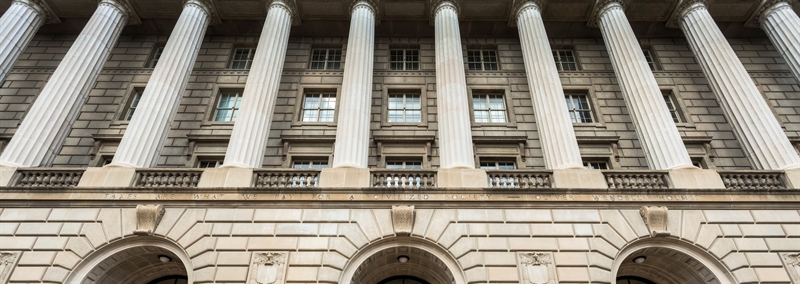
1111 Constitution Avenue
GAO Issues Report on Direct File: On Dec. 19, the Government Accountability Office (GAO) published a report titled “IRS Successfully Piloted Online Tax Filing but Opportunities Exist to Expand Access.” The report analyzes how the IRS plans to apply leading practices for the Direct File pilot program’s design to inform next steps, how the IRS plans to expand Direct File, and how online filing services of certain territorial and foreign tax jurisdictions compare to the IRS and Direct File.
GAO found that the Direct File pilot was successful to the extent that 140,803 returns were accepted on the platform and that taxpayers reported having a “much easier” filing experience compared to the prior year. GAO also found that the IRS followed leading practices in conducting the pilot, including identifying learning objectives collecting relevant data, and learning lessons such as developing website content. However, GAO found that the IRS is behind schedule in its expansion efforts, including in recruiting and training customer service representatives and reaching agreements with all states. With regard to comparisons between Direct File and other jurisdictions’ tax filing software, GAO found that there was higher prepopulation of tax return information on other platforms, with the IRS saying they are considering additional prepopulation but are still in early planning stages. GAO also noted that, for the 2025 tax filing season, Direct File is expected to cost between $34.7 million and $42.5 million to administer, with more than 30 million eligible taxpayers.
GAO issued four recommendations to the IRS, including improving coordination to recruit Direct File customer support employees, further expanding Direct File to all eligible taxpayers in the future, developing research methods to examine new capabilities for Direct File, and identifying additional data in Direct File that could be prepopulated.
Wyden, Cortez Masto Probe Billy Long’s ERTC Involvement: On Dec. 18, then-Senate Finance Committee Chairman Ron Wyden (D-OR) and Sen. Catherine Cortez Masto (D-NV) sent letters to Lifetime Advisors and Commerce Terrace Consulting, two tax advisory firms that Commissioner of Internal Revenue nominee-designate Billy Long worked with to help promote the Employee Retention Tax Credit (ERTC). The ERTC is a COVID-19 pandemic-era credit program that allowed businesses that were forced to temporarily close or experienced a gross receipt decline during the pandemic to keep employees on payroll but has been subject to abuse by organizations filing fraudulent claims in an attempt to claim the credit.
The lawmakers allege in the letters that Long’s payment structure of being paid on a contingency basis for ERTC refunds, as well as statements Long has made about successfully being able to claim the credit for clients consistently, are “deeply concerning” and warrant further investigation. The letter requests Lifetime Advisors and Commerce Terrace Consulting to respond to questions concerning how many ERTC claims each firm has submitted and how many of those were paid out, denied or revoked; how advisors are compensated; and the extent to which Long was involved with each firm, including any qualifications he has to submit ERTC claims.
IRS to Send Recovery Rebate Credit Checks to Non-Claimants: On Dec. 20, the Internal Revenue Service (IRS) announced that it would issue automatic payments to taxpayers who qualified for the pandemic-era Recovery Rebate Credit in 2021 but did not claim it on their tax return. Most eligible taxpayers have already claimed the Recovery Rebate Credit or the monetary-equivalent Economic Impact Payments, but the IRS estimated that about 1 million eligible taxpayers did not claim them. The agency noted that taxpayers do not need to take additional action to claim the Recovery Rebate Credit, and that payments will be distributed to taxpayers via direct deposit or paper check along with a letter notifying them of a payment. In the announcement, IRS Commissioner Daniel Werfel said that the payments represent “our commitment to go the extra mile for taxpayers.”
Treasury Department, IRS Issue Final Rules on Reporting Requirements for Certain Crypto Brokers: On Dec. 27, the Treasury Department and Internal Revenue Service (IRS) issued final regulations on reporting requirements for decentralized finance (DeFi) brokers for cryptocurrency (crypto) and other digital assets. The final rules require brokers to file information returns on payees’ financial details, including their name and address and gross proceeds on transactions. To aid in this regard and to confirm payee information with the IRS, brokers will also be required to send customers IRS Form 1099 to report their taxable income to the IRS. Assistant Secretary for Tax Policy Aviva Aron-Dine said that the final rules “will help ensure that all taxpayers play by the same set of rules and have access to the information they need to file their taxes accurately.” The rules were officially published in the Federal Register on Dec. 30, 2024, and will take effect on Feb. 28, 2025.
At a Glance
Treasury Department, IRS Issue Final Regulations on Consolidated Returns: On Dec. 30, the Treasury Department and Internal Revenue Service (IRS) issued final regulations clarifying consolidated-return filing rules. These updates include modernizing language, clarifying previous guidance and withdrawing temporary regulations. They largely adopt the proposed rules from August 2023.
Treasury Department, IRS Make Corrections to CAMT Regulations: On Dec. 22, the Treasury Department and Internal Revenue Service (IRS) issued technical corrections to proposed rules released on Sept. 13, 2024, regarding the application of the corporate alternative minimum tax (CAMT). These corrections include fixing errors in certain examples and clarifying the basis for the amortization and depreciation of property. Treasury Office of Tax Policy attorney-advisor Deborah Tarwaskono previewed these changes at an international tax conference on Dec. 13.
Smith Considers Proposing Tax Rate Increases on University Endowments: At a meeting among House Republicans on Jan. 4, House Ways and Means Committee Chairman Jason Smith (R-MO) reportedly proposed raising taxes on university endowments as a component to include in a potential reconciliation bill that also includes extensions to several parts of the Tax Cuts and Jobs Act (TCJA, Pub. L. 115-97). Republicans are still negotiating what items to include and if and how to offset the cost of any extensions.
Republican SALT Lawmakers to Meet with Trump: On Jan. 11, several House Republican lawmakers who are advocates of lifting the cap on the state and local tax (SALT) will meet with President-elect Donald Trump at his Mar-a-Lago residence. The lawmakers are reportedly from New York, New Jersey and California. The discussion will focus on the potential to include SALT reform in a reconciliation bill, a cause that Trump expressed support for during his 2024 presidential campaign.
Hearings and Events
House Ways and Means Committee
The House Ways and Means Committee has no tax hearings scheduled for this week.
Senate Finance Committee
The Senate Finance Committee has no tax hearings scheduled for this week.