

Legislative Landscape
Shutdown Week 7 – The End: Over the weekend, Senate Majority Leader John Thune (R-SD) kept the Senate in session to complete negotiations on a deal to end the ongoing government shutdown. After failing to advance a continuing resolution (CR) for the 15th time last week, both parties reached an agreement to extend government funding to Jan. 30. On Sunday, Sens. Jeanne Shaheen (D-NH), Maggie Hassan (D-NH), Dick Durbin (D-IL), Angus King (I-ME), John Fetterman (D-PA), Catherine Cortez Masto (D-NV), Jacky Rosen (D-NV) and Tim Kaine (D-VA) joined Republicans, voting 60-40, to advance the bipartisan deal.
The agreement includes a package, or “minibus,” of the Agriculture-FDA, Military Construction and Veteran Affairs, and Legislative Branch FY 2026 appropriations bills, reverses the October Reduction in Force (RIF) orders with backpay for federal employees and extends current government funding levels through Jan. 30. While it does not include an immediate extension of the Affordable Care Act (ACA) premium tax credits, Majority Leader Thune has committed to holding a vote on the matter by mid-December.
On Monday evening, the Senate passed the minibus package including the continuing resolution (CR) by a vote of 60-40 and sent it to the House for final passage.
On the other side of Capitol Hill, Speaker Mike Johnson (R-LA) called the House back after nearly two months out of session, with a vote on the Senate-passed minibus package expected on Wednesday evening. Earlier this week, House Democrats were actively whipping against the bill with the majority of Democrats are expected to oppose final passage. Speaker Johnson also swore in Rep.-elect Adelita Grijalva (D-AZ) on Wednesday afternoon.
The Future of Reconciliation 2.0: Senate Republicans are reviving talks about a possible second budget reconciliation bill as Senate Budget Committee Chairman Lindsey Graham (R-SC) met with GOP senators to explore what a new package could include, potentially focused on health care, taxes and spending. Senate Budget Committee Republicans plan to start hearings and discussions on a budget resolution that could unlock a second reconciliation package. While there is skepticism about the appetite and feasibility to pass another major bill, Chairman Graham noted a growing desire within the conference to act. Majority Leader Thune also remarked that the Budget Committee will assess whether there’s a rationale for a second reconciliation bill before proceeding further. Overall, it is unlikely that any development on a budget resolution will happen this year.
Senators Write to Bessent Regarding IDR Plans: On Nov. 9, Sens. Elizabeth Warren (D-MA), Bernie Sanders (I-VT), Jeff Merkley (D-OR), Richard Blumenthal (D-CT), Chris Van Hollen (D-MD), Mazie Hirono (D-HI), Tammy Duckworth (D-IL), Kirsten Gillibrand (D-NY) and Cory Booker (D-NJ) wrote a letter to Treasury Secretary and Acting Internal Revenue Service (IRS) Commissioner Scott Bessent urging immediate action to prevent an impending “tax bomb” on Americans using income-driven repayment (IDR) plans for student loans. The senators warned that the expiration of a provision from the American Rescue Plan Act (ARPA) would result in surprise tax liabilities as high as $10,000 for many low- and middle-income families starting next year. ARPA, signed into law by President Joe Biden in 2021, included a provision that exempted student loan forgiveness from taxable income through 2025. Public Service Loan Forgiveness (PSLF) and Teacher Loan Forgiveness (TLF) remain permanently tax free. The senators called on the Treasury Department and IRS to use existing administrative authorities, such as the insolvency exclusion, scholarship exclusion and general welfare exclusion and to exclude IDR cancellation from gross income. They requested the agencies confirm a ruling on this exclusion no later than Nov. 23.

Tax Worldview
IFRS Foundation Looks to Ban Nonpaying Jurisdictions: The IFRS Foundation is currently facing significant financial strain and the expiration of initial funding for its sustainability board. The council, which advises the foundation overseeing the international accounting standards, discussed shifting away from voluntary contributions toward mandatory levies on companies and potentially enforcing intellectual property rights to block nonpaying jurisdictions. Currently, only 40 of 140 countries contribute, leaving the foundation projected to lose £5 million (approximately $6.6 million) in 2025.
Developing Countries Gather in Nairobi to Plan UN Global Tax Treaty Framework: On Nov. 10, the Intergovernmental Negotiating Committee on the UN Framework Convention on International Tax Cooperation gathered in Nairobi to finalize draft language for a global tax treaty. African countries are leading a delegation of developing nations to ensure fair allocation of taxing rights. Proposals under discussion include recognizing all jurisdictions’ rights to tax business activities within their economies and creating protocols on dispute resolution and cross-border services. The meetings, running through Nov. 19, mark the third session toward completing the UN tax treaty by 2027 and also feature debate over sustainability measures, including a proposed 20% surtax on oil and gas revenue.
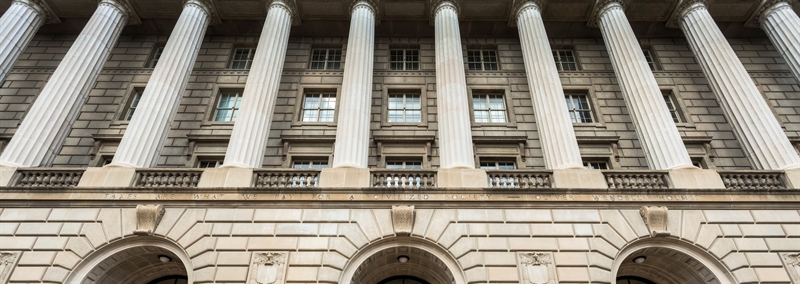
1111 Constitution Avenue
IRS Issues Penalty Relief Guidance for Tips and Overtime Deductions: On Nov. 5, the Internal Revenue Service (IRS) issued Notice 2025-62 outlining temporary penalty relief for tax year 2025 related to new information reporting requirements under the One Big Beautiful Bill Act (OBBBA, P.L.119-21). Specifically, the notice provides that the IRS will not impose penalties on employers for missing or incomplete reporting with respect to tip income and overtime subject to the new deductions for such income, provided all other required information is accurate. The penalty relief is limited to 2025 returns and statements, and the IRS encouraged employers and filers to share relevant data with employees to support proper taxpayer claims on their 2025 tax returns.
IRS Issues Guidance on Crypto in Investment and Grantor Trusts: On Nov. 10, the Internal Revenue Service (IRS) issued Revenue Procedure 2025-31, which provides a safe harbor for investment and grantor trusts using digital asset staking on proof-of-stake blockchains. Staking is defined as the practice of holding your digital assets or tokens in a blockchain network to earn rewards. The guidance clarifies that staking, when conducted within prescribed limits, will not jeopardize a trust’s classification as an investment or grantor trust for tax purposes. Some of the requirements to maintain investment trust status include using only one type of digital asset, having custodial arrangements where it retains ownership and maintaining liquidity for investor redemptions. Additionally, trust interests must be traded on national securities exchanges with Securities and Exchange Commission (SEC)-approved disclosures, and trusts must have liquidity policies to meet redemption demands despite staking restrictions. Existing trusts have a nine-month window starting Nov. 10, 2025, to amend their agreements to comply. The guidance is effective for tax years ending on or after Nov. 10, 2025.
Direct File Ends, Treasury Department Issues Report on Its Replacement: Last week, the Treasury Department notified states that the Internal Revenue Service (IRS) will not expand or relaunch its Direct File tool for the 2026 filing season, citing cost, low participation and private-sector free filing alternatives. Instead, in a report dated Oct. 2, the Treasury Department outlined plans to focus on revamping the long-standing Free File program in collaboration with private tax software providers. The report emphasized that the Direct File pilot resulted in fewer than 300,000 accepted returns in filing season 2025 and that scaling the system nationally would require sustained investment and staffing that the IRS cannot commit to given other modernization efforts. IRS officials said the Treasury Department now supports a cooperative public-private filing model rather than an IRS-managed system.
House Ways and Means Chairman Jason Smith (R-MO) praised the move as a victory for taxpayer choice and efficient government. Direct File advocates such as Senate Finance Committee Ranking Member Ron Wyden (D-OR) criticized the decision, accusing the Trump administration of prioritizing big corporations over working people.
Regulatory Rollback Possibly Delayed by OBBBA Implementation: In the 2025-2026 Treasury Department and Internal Revenue Service (IRS) Priority Guidance Plan, the framework outlined several regulations to rescind or otherwise modify to reduce taxpayer burden, including rules on corporate subsidiaries’ foreign-currency gains and losses, the stock-buyback excise tax and cloud computing income sourcing. However, progress on these regulatory projects is likely to be delayed as the agencies prioritize guidance and regulations implementing provisions of the One Big Beautiful Bill Act (OBBBA, P.L.119-21). In the past few months, the agencies have announced plans to withdraw and revise several regulations, including rescinding guidance on partnership basis-shifting transactions. The Treasury Department and the IRS are also revising the corporate alternative minimum tax (CAMT) regulations to provide more flexibility for partnerships and to address other compliance issues, as well as to address regulations issued by the prior administration with respect to foreign losses, corporate spin-offs and more.
IRS Issues FAQs on Broker Reporting for Digital Assets: On Oct. 30, the Internal Revenue Service (IRS) issued FAQs to address digital asset broker reporting issues under section 6045 to clarify when Form 1099-DA reporting applies. The informal guidance explains that custodial services alone do not create reporting obligations, but entities such as digital asset kiosks that execute sales must report proceeds. The FAQs also address how brokers may use customer or transfer provided acquisition information for lot ordering (but not for basis reporting), how to complete Form 1099-DA for multiple lots or NFT transactions, and when to check boxes indicating reliance on customer data. The FAQs cover management of transaction fees in digital asset exchanges, optional basis reporting, NFT sale aggregation and tests for determining whether a stablecoin qualifies as a “qualified stablecoin” under the stabilization mechanism rules.
Warren, Wyden Send Letter to Fiserv CEO Regarding Bisignano: On Nov. 6, Senate Finance Committee Ranking Member Ron Wyden (D-OR) and Senate Banking, Housing and Urban Affairs Committee Ranking Member Elizabeth Warren (D-MA) sent a letter to Fiserv CEO Mike Lyons requesting detailed information about certain disclosures made by Fiserv relating to its federal contracts and operations during Frank Bisignano’s tenure as the company’s CEO. The senators asked for clarification on Bisignano’s involvement in Fiserv’s bid for a U.S. Bureau of the Fiscal Service contract and questioned the accuracy of his financial projections for the company. Bisignano, who served as Fiserv’s CEO from July 2020 until May 2025, prior to becoming commissioner of the Social Security Administration and Internal Revenue Service (IRS) CEO, had divested nearly $530 million in Fiserv stock before the company faced financial setbacks. The letter also raised concerns about the circumstances surrounding the Treasury Department’s contract reversal involving Fiserv’s subsidiary and requested a thorough explanation of Bisignano’s role in financial decision-making and any potential impacts on government operations.

At a Glance
BPC Issues Report on Crypto Tax Treatment: Last week, the Bipartisan Policy Center (BPC) released a report outlining challenges related to the tax treatment and regulation of cryptocurrency. The report highlights that while cryptocurrencies like Bitcoin and Ethereum serve as digital assets with growing market capitalization, there is a critical need for clearer federal tax and regulatory frameworks. It addresses complex issues such as how crypto is taxed as property for individuals and businesses, the determination of basis for tax purposes, international tax enforcement challenges and evolving regulatory debates over assets like stablecoins and NFTs.
Hearing and Events
House Ways and Means Committee
No hearings are scheduled for this week.
Senate Finance Committee
The Senate is out of session this week.