

Legislative Landscape
On Tuesday, House Majority Leader Steve Scalise (R-LA) released the 2026 House calendar.
What’s Next After the Government Shutdown: Last week, the House approved the Senate-adopted continuing resolution (CR) by a vote of 222-209 and the president signed it into law on Nov. 12 to reopen the government after the six-week shutdown. The CR also funds federal agencies through Jan. 30, 2026, and includes full-fiscal-year funding for the FY2026 Agriculture, Military Construction and Veterans Affairs and Legislative Branch appropriations. It also safeguards SNAP benefits until the next fiscal year, halts any Reduction in Force (RIF) notices through Jan. 30, 2026, and mandates back pay for employees furloughed during the shutdown.
For more details on last week’s CR, please see here for Brownstein’s client alert.
Health Care on the Mind: Since the start of the government shutdown in October, several proposals to amend or extend the Affordable Care Act (ACA) credits have emerged. Last week, House Ways and Means Committee Republicans began circulating legislation aligned with President Trump’s proposal to redirect Affordable Care Act (ACA) subsidies directly to individuals via health savings accounts (HSAs). The proposal would allow enrollees to receive financial assistance upfront rather than having subsidies applied by insurers to out-of-pocket costs. The bill, introduced by Reps. Kat Cammack (R-FL) and Greg Steube (R-FL), could complicate ongoing negotiations in the Senate on extending the expiring enhanced ACA subsidies, with some moderate Republicans favoring compromise measures. Senate Democrats are expecting a floor vote in mid-December on extending the subsidies, but House Speaker Mike Johnson (R-LA) has not committed to such a vote before the year-end expiration. Concurrently, the Senate Finance Committee is holding a hearing this week on the rising cost of health care as both chambers work on finding a solution to the credit expiration.
Reconciliation Round 2: Discussions around a potential second reconciliation bill suggest it could potentially address current health care challenges, including reforms to the Affordable Care Act (ACA) credits such as income caps, preenrollment verification and new rules restricting special enrollment access to premium tax credits. Alongside ACA provisions, the bill also could introduce significant Medicaid changes like enhanced work requirements, increased frequency of eligibility renewals and new limits on state provider taxes and directed payments. Beyond health care, the bill’s scope could widen to incorporate broader affordability initiatives, including potential new cost-of-living supports, as well as tariff-related provisions contingent on how the U.S. Supreme Court rules on President Trump’s use of the International Emergency Economic Powers Act (IEEPA) to impose tariffs based on national emergencies.
Cantwell Writes to JCT about NCAA Tax-Exempt Status: On Monday, Senate Commerce, Science, and Transportation Ranking Member Maria Cantwell (D-WA) sent a letter to the Joint Committee on Taxation (JCT) requesting a formal analysis on the implications of maintaining the tax-exempt status of college sports revenue. She also asks the JCT to consider the implications of revoking tax-exempt status for the NCAA, universities and athletic conferences, subjecting athletic revenue to unrelated business income tax (UBIT) and codifying tax rules for so-called name, image and likeness (NIL) collectives. The Internal Revenue Service (IRS) recently found that NIL collectives do not qualify as tax-exempt entities due to private benefits for athletes. Ranking Member Cantwell also requested an assessment of the effectiveness of current excise taxes on excessive compensation and buyouts for coaches and asked for guidance on the tax treatment for athletes compensated for their name, image and likeness if classified as employees versus independent contractors.
Boyle, Fitzpatrick Introduce Bill to Expand Semiconductor Investment Credit: Earlier this week, Reps. Brendan Boyle (D-PA) and Brian Fitzpatrick (R-PA) introduced H.R.6055, the Strengthening Essential Manufacturing and Industrial (SEMI) Investment Act to expand the Section 48D Advanced Manufacturing Investment Credit for semiconductors. The bill would expand eligibility to upstream material suppliers and extend the credit through 2031. Sens. Marsha Blackburn (R-TN), Michael Bennet (D-CO), Thom Tillis (R-NC) and Chris Coons (D-DE) introduced the Senate companion bill in May.
State Implementation of OBBBA Faces Budget Hurdles: Last week, Pennsylvania enacted its FY 2026 budget that avoids adopting new federal tax provisions from the One Big Beautiful Bill Act (OBBBA, P.L. 119-21), which allows immediate expensing of research and manufacturing costs. The plan maintains scheduled corporate tax rate cuts to 7.49% and avoids new taxes or use of the $7.5 billion contingency fund.
At the same time, Washington, D.C.’s emergency legislation to decouple from several OBBBA provisions, including deductions for tips, overtime and senior income, underscored how states are rejecting costly federal tax provisions to stem revenue losses. Other states like New York, Illinois, Colorado and Maine will continue taxing tip and overtime income by requiring taxpayers to add back those federal deductions on state returns, while Maine has also declined to adopt the new senior and car loan interest deductions.

Energy-Tax Mainlines
EU Begins Outlining CBAM Fees: This week, the European Commission has reportedly begun circulating a draft framework to determine the carbon intensity of imported goods under the European Union’s (EU) Carbon Border Adjustment Mechanism (CBAM). The mechanism, set to begin Jan. 1, 2026, will target importers of products such as steel, cement, aluminum and fertilizers from countries with less stringent emissions standards. The importer will pay a border fee reflecting the difference with EU climate rules with the goal of using these benchmarks to ensure fair competition and encourage global decarbonization. The proposed rules, which also specify that electricity imports are excluded from the adjustment, still face hurdles before they are enacted into law.
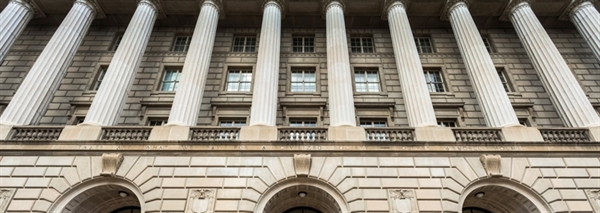
1111 Constitution Avenue
Trump Withdraws Korb Nomination for Chief Counsel: On Nov. 14, President Trump withdrew his nomination of Donald Korb to be IRS chief counsel and treasury assistant general counsel, following public criticism from conservative activist Laura Loomer. Korb’s nomination was expected to be held for a vote in the Senate this week. Loomer questioned Korb’s previous experience, pointing to his past donations to Democrats and alleged criticism of whistleblowers. Korb, who previously served as IRS chief counsel under President George W. Bush, faced opposition from some Democrats who raised concerns about his ethics commitments and controversial remarks to Senate staff.
Currently, Treasury Assistant Secretary for Tax Policy Ken Kies is serving as acting IRS chief counsel. Korb’s withdrawal raises questions as to whether he will continue to perform this dual role indefinitely and the potential for a future nomination to fill the role, which is one of two Senate-confirmed positions at the Internal Revenue Service (IRS).
IRS Issues Guidance on 401(k) Limit Increases: On Nov. 13, IRS issued guidance providing the inflation-adjusted limits for various retirement accounts. Starting in 2026, employees participating in 401(k), 403(b), governmental 457, and Thrift Savings Plans can contribute up to $24,500, up $1,000 from 2025. The IRA contribution limit rises to $7,500, with the catch-up contribution for individuals aged 50 and over increasing to $1,100 under SECURE 2.0. The catch-up contribution limit for most employer-sponsored plans increases to $8,000, with a higher limit still applying to employees aged 60 to 63.
TIGTA Announces Ongoing and Planned Reports for 2026: Earlier this week, the Treasury Inspector General for Tax Administration (TIGTA) released the Fiscal Year 2026 Program Plan that outlines audits, evaluations and reviews to strengthen tax administration and IRS operations. The plan combines discretionary projects and those mandated by statute, prioritized through TIGTA’s annual risk-based strategic planning process and congressional, Treasury Department or IRS input. Some of the planned focus areas include managing workforce and budget reductions, improving operational efficiency, safeguarding taxpayer data, implementing the One Big Beautiful Bill Act (OBBBA), enhancing taxpayer service and rights and modernizing IT systems.

Tax Worldview
U.S. Trade Deals Notably Include Pledge of DST Exemptions: In trade deals signed last week, the United States secured pledges from Argentina, Switzerland, Liechtenstein, Ecuador, El Salvador and Guatemala to refrain from imposing such digital service taxes (DSTs) as part of new reciprocal trade frameworks. None of the six countries currently have DSTs in place. Following recent trade deals with Asian countries, these frameworks reflect a shift by the Trump administration from pursuing DST relief through the Organisation for Economic Co-operation and Development (OECD) to using trade negotiations to protect U.S. tech companies.
U.S. Companies Prepare Global Tax Reporting for 2026: U.S. companies will soon begin reporting their global minimum tax liabilities for 2026 under the Organisation for Economic Co-operation and Development’s (OECD) Pillar Two framework. While efforts continue to reach agreement on the United States’ proposal to exempt U.S. firms from Pillar Two through a side-by-side system, multinational companies will still need to prepare extensive financial reports for jurisdictions like the European Union (EU) that have already implemented the rules. Compliance costs are expected to be substantial and reporting is likely to show temporary liabilities due to the uncertainty of ongoing policy negotiations and delays in countries codifying any new side-by-side deal.
Countries Meet at UN Framework Convention to Discuss Global Tax Treaty: Last week at the United Nations (UN) Framework Convention, several countries including Norway, Italy, South Korea and the United Kingdom (UK) objected to draft provisions in a global tax treaty that would significantly expand source-based taxation. They argued for a more balanced approach and opposed language that they believe could lead to unfair multiple taxation and increased burdens on trade and investment. Meanwhile, developing countries are continuing to work towards shifting more taxing rights to source countries, while arguing that current rules favor wealthier, “resident” nations. Delegates are still reviewing the draft’s key commitments, including those on the exchange of information for high-net-worth individuals, illicit financial flows and dispute resolution, with many details still to be clarified before any agreements are finalized.
Delegates are also advocating for the use of the UN tax treaty as a tool to close capacity gaps between tax authorities in developed and developing economies. The treaty’s current draft calls for voluntary mechanisms to build up these countries’ administrative capabilities and aims for a more inclusive global tax system. Negotiators are working on policies for taxing cross-border services, including digital services, and protocols to prevent double taxation and resolve disputes. The final treaty and supporting protocols are expected by 2027.
Hearings and Events
House Ways and Means Committee
The House Ways and Means Committee does not have any tax hearings scheduled for this week.
Senate Finance Committee
The Senate Finance Committee does not have any tax hearings scheduled for this week.