

Legislative Landscape
Shutdown Week 4: The federal government shutdown that began on Oct. 1 continues without resolution. On Oct. 20, the Senate failed for the 11th time to advance a continuing resolution (CR) to fund government operations. The continuing stalemate centers on disagreement over extending enhanced Affordable Care Act (ACA) subsidies. The House has officially been out of session for over a month, as Speaker Mike Johnson (R-LA) has kept the chamber in recess pending enactment of the CR extending government funding until Nov. 21. With less than a month remaining before the House deadline, Senate Majority Leader John Thune (R-SD) said the House should consider coming back in session to pass an updated CR with an extended deadline.
On Oct. 15, two senior Senate Democrats sent a letter to Treasury Secretary Scott Bessent requesting information regarding current staffing levels and related layoffs at the Treasury Department. The letter, led by Senate Finance Committee Ranking Member Ron Wyden (D-OR) and Senate Banking, Housing, and Urban Affairs Committee Ranking Member Elizabeth Warren (D-MA), seeks organizational charts and employee counts as of Jan. 20 and Sept. 30, as well as all reduction in force (RIF) notices and plans issued on or after Oct. 10. The senators also expressed concern that the Trump administration’s layoffs weaken the Treasury Department’s ability to fulfill statutory responsibilities, including critical functions within the Internal Revenue Service (IRS). The letter requests copies of earlier workforce optimization plans submitted under executive orders earlier in the year, along with any analyses detailing how they interact with recent layoffs to assess the impact on the Treasury Department’s operations if RIFs proceed as planned.
In the courts, U.S. District Judge Susan Illston of California temporarily blocked the Trump administration from proceeding with federal employee layoffs during the government shutdown. She ruled that the actions appeared to exceed legal authority and found that the administration failed to comply with statutory procedures for reductions in force. She cited public comments by President Trump, Vice President JD Vance and Office of Management and Budget Director Russ Vought suggesting partisan intent. The court’s order also prohibits officials from issuing or executing any RIF notices affecting employees represented by the American Federation of Government Employees (AFGE) and halts all layoffs initiated since Oct. 10.
In response, the Treasury Department and the Department of Health and Human Services (HHS) stated that their recent layoffs of approximately 4,100 federal employees do not violate Judge Illston’s restraining order. They argued that the order only applies to workers represented by unions involved in the lawsuit, including AFGE, but not the National Treasury Employees Union, which represents Treasury Department employees.
Lawmakers Write to Governors on the Federal Tax Credit Scholarship Program: Last week, the Wisconsin Republican congressional delegation, led by Rep. Tom Tiffany (R-WI), sent a letter to Gov. Tony Evers (D-WI) urging him to support the new Federal Tax Credit Scholarship Program, which requires state approval for Wisconsin families to participate. Established under the One Big Beautiful Bill Act (OBBBA, Public Law 119-21), the program offers a dollar-for-dollar federal tax credit of up to $1,700 for donations to qualified Scholarship Granting Organizations (SGOs) supporting families earning up to 300% of their county’s median income. Scholarships can cover tuition, school supplies, tutoring, special needs services and transportation costs. Gov. Evers has declined to allow Wisconsin to opt into the program.
Separately, senior House and Senate Republicans sent a letter to Gov. Kay Ivey (R-AL) urging her to opt into the same program. The letter was led by House Education and Workforce Committee Chairman Tim Walberg (R-MI), Reps. Adrian Smith (R-NE) and Burgess Owens (R-UT), Senate Health, Education, Labor, and Pensions Chairman Bill Cassidy (R-LA) and Sen. Tim Scott (R-SC). It emphasized the program’s potential to expand educational choice and support students without affecting public school funding.
The letters from congressional lawmakers to governors reflect a broader GOP push to secure bipartisan buy-in for the Federal Tax Credit Scholarship Program at the state level.

Energy-Tax Mainlines
Senators Send Letter on Hydrogen Hub Cancellations: Last week, Sens. Dave McCormick (R-PA), Shelley Moore Capito (R-WV), Jim Justice (R-WV) and Jon Husted (R-OH) reportedly sent a letter to President Trump and Energy Secretary Chris Wright urging the Trump administration to maintain federal funding for the Mid-Atlantic (MACH2) and Appalachian (ARCH2) hydrogen hubs established under the Infrastructure Investment and Jobs Act.
Trump Kills Carbon Shipping Tax Proposal: On Oct. 17, the Trump administration disrupted a proposal to tax greenhouse gas emissions from global shipping at the International Maritime Organization (IMO) in London, resulting in a one-year delay pushed by Saudi Arabia and Russia. The measure collapsed after the threats of tariffs and shifting votes from countries such as Greece, Cyprus and China. Supporters of the delay argued the proposed carbon tax would burden consumers and distort markets, while other industry groups warned that the failure to act could lead to a fragmented patchwork of regional regulations and could create uncertainty for global shipping.
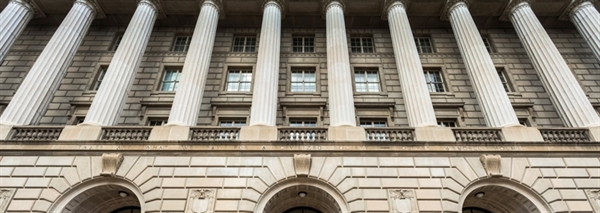
1111 Constitution Avenue
IRS Issues Transitional Guidance for No Tax on Auto Loans: On Oct. 21, the IRS issued Notice 2025-57, which provides transitional guidance and penalty relief for businesses and lenders required to report auto-loan interest under the OBBBA. The guidance allows eligible entities to fulfill new information reporting obligations for 2025 by providing simplified statements to borrowers showing the total interest received on qualified passenger vehicle loans, including through online portals or regular account statements. Lenders that meet these requirements by Jan. 31, 2026, will benefit from automatic relief from penalties under Sections 6721 and 6722 for failing to file or provide detailed information returns, which are expected for tax year 2026 reports. The guidance also notes that the transition period recognizes the need for additional time to update systems, forms and programming to comply fully with the reporting requirements under Section 6050AA while ensuring taxpayers receive timely and accurate information for determining deductible interest amounts on 2025 tax returns.
Trump Administration to Review IRS-CI Operations to Scrutinize Left-Leaning Organizations: Last week, reports indicated that the Trump administration is planning broad systematic changes to the IRS Criminal Investigations Division (IRS-CI). Treasury Secretary and Acting IRS Commissioner Scott Bessent and advisor Gary Shapley are reportedly looking to restructure leadership and reduce the role of IRS lawyers in criminal probes to allow the division greater independence in pursuing cases. News reports stated that Shapley has compiled a list of potential investigation targets that includes Democratic donors and left-leaning nonprofit groups. The plans are purported to be part of a broader executive initiative to examine alleged financial networks linked to political unrest and violence.
Senate Finance Committee Ranking Member Ron Wyden (D-OR) characterized the move as weaponization of the federal government. Sens. Chuck Grassley (R-IA) and James Lankford (R-OK) were critical of the reported plan and said that targeting would be inappropriate if the reports are accurate. House Ways and Means Ranking Member Richard Neal (D-MA) sent a letter to Acting Inspector General for Tax Administration Heather Hill, requesting an investigation into the reports, while also requesting that House Ways and Means Committee Chairman Jason Smith (R-MO) convene a special committee meeting to discuss agency operations and the reports.

Tax Worldview
OECD Secretary General Issues Report for G20 Meeting: On Oct. 15, the Organisation for Economic Co-operation and Development’s (OECD) secretary-general issued a report ahead of the G20’s November meeting of finance ministers and governors of Central Banks in South Africa. The report outlined plans to finalize major revisions to the current Pillar Two framework by the end of the year to address U.S. concerns over potential double taxation of American companies. The OECD Inclusive Framework is collaborating with the business community to design an “effective tax rate” safe harbor that would simplify compliance for companies operating in high-tax jurisdictions, with completion expected later this year. The OECD noted that more than 65 jurisdictions have already adopted or taken concrete steps toward implementing the global minimum tax and plans to share recommendations with the South African G20 Presidency on simplifying international tax rules, particularly for developing countries.
UN Holds 31st Session for Tax Committee in Geneva: This week, the United Nations (UN) Committee of Experts on International Cooperation in Tax Matters is holding its 31st session in Geneva from Oct. 21‒24. The committee will be setting its priorities for the next four years and considering whether to continue past measures or adopt new ones that focus on wealth taxes, critical minerals and transfer pricing. Key agenda items also include updating the UN model tax convention to address complex corporate structures, taxation of cross-border digital services and refinement of transfer pricing rules to prevent profit shifting. Industry groups are urging the committee to align its work with the parallel UN tax treaty negotiations to avoid overlap.
EU Officials Discuss DST Path for Pillar One: At a European Parliament subcommittee hearing, officials from Spain, Italy and France emphasized that the Organisation for Economic Co-operation and Development’s (OECD) Pillar One framework remains the best solution for fairly taxing digital companies. They argue that it avoids risks of double taxation and market fragmentation from unilateral digital services taxes (DSTs). Several European Union (EU) countries have enacted their own DSTs, but such regimes would be phased out upon a Pillar One final agreement. The officials also highlighted the importance of U.S. participation in OECD talks to target American digital giants effectively. Without a coordinated approach, they warned of proliferating DSTs leading to tax disputes and inefficiencies. The EU previously abandoned plans for a bloc-wide DST and emphasized the need for unity among member states.
OECD Releases Framework for Exchanges on Real Estate Tax Data: On Oct. 15, the Organisation for Economic Co-operation and Development (OECD) released a new framework for the voluntary exchange of cross-border real estate ownership data. The framework allows countries to regularly share information on property holdings, acquisitions, disposals and income from immovable assets while upholding legal and technical standards. The exchange would begin with a one-time exchange followed by annual updates on foreign property ownership and continue with yearly exchanges on property income and disposals.
At a Glance
Mercatus Center Issues Report on Nonprofit Taxation: On Oct. 14, the Mercatus Center at George Mason University issued a policy brief titled “Nonprofit Businesses and the Leaky Bucket of US Tax Policy.” The report highlights a purported underestimate in U.S. federal tax expenditure reporting due to large amounts of untaxed business income earned by nonprofit organizations. While the Joint Committee on Taxation (JCT) estimates around $1.9 trillion in tax expenditures, the report states that it overlooks more than $2.8 trillion in commercial income earned by nonprofits, such as hospitals, universities and business leagues, that largely goes untaxed. This income, estimated to cost the government about $51 billion annually, challenges the notion that nonprofits primarily rely on charitable contributions, noting instead that most revenue is derived from business activities like insurance, royalties and contracts. The report argues that lawmakers need to fully account for this uncounted revenue and reconsider which activities warrant tax-exempt status to better address fiscal deficits.
Hearings and Events
House Ways and Means Committee
The House is out of session this week.
Senate Finance Committee
The Senate Finance Committee does not have any hearings scheduled for next week.