

Legislative Landscape
Shutdown Week 5: The federal government shutdown that began on Oct. 1 continues with no clear path to a conclusion. Last week, the Senate failed for the 13th time to advance a continuing resolution (CR) to fund government operations. The stalemate continues to center on disagreement over extending enhanced Affordable Care Act (ACA) subsidies. The House has officially been out of session for over a month, as Speaker Mike Johnson (R-LA) has kept the chamber in recess pending Senate passage of the CR extending government funding until Nov. 21.
Several competing Senate proposals have emerged to fund parts of the government and its employees:
- Sen. Chris Van Hollen’s (D-MD) proposal would guarantee prompt pay for all federal workers, both excepted and furloughed, as well as contractors and military personnel, during the shutdown and would prohibit reductions in force.
- Sen. Ron Johnson’s (R-WI) measure would provide on-time pay only for excepted workers and active-duty military, focusing on those required to work, but stops short of immediate pay for furloughed workers.
- Sen. Gary Peters (D-MI) proposed ensuring retroactive pay for all federal employees, military service members and contractors for the full shutdown period.
- Sen. Josh Hawley (R-MO) introduced a bill to ensure continued funding of the Supplemental Nutrition Assistance Program (SNAP) during the government shutdown, providing uninterrupted food benefits retroactive to the start of the shutdown.
- Sen. Ted Cruz’s (R-TX) proposal would provide back pay and ongoing pay for essential employees at the Federal Aviation Administration (FAA), Transportation Security Administration (TSA), air traffic controllers, TSA screeners and contractors supporting aviation system safety and security functions during the shutdown, ensuring continued funding of these critical positions retroactive to Sept. 30, 2025.
Last week, Sens. Van Hollen and Peters sought to pass their bills by unanimous consent, but their efforts were blocked by Sen. Johnson. Senate Democrats also voted against Sen. Johnson’s proposal, expressing concerns that it selectively pays only some federal workers rather than all. Sen. Johnson noted that his proposal overlapped with Van Hollen’s, and they are reportedly working to combine their bills to ensure pay for certain federal employees.
In addition to legislative efforts, staff from both Democratic and Republican tax writers have noted that the furlough of Taxpayer Advocate Service (TAS) employees has significantly delayed constituent casework with the IRS in many congressional offices. TAS offices nationwide are closed, with only 93 of about 1,500 employees retained, and appointments relating to TAS cases have been canceled until the government reopens. The shutdown has intensified waiting times for constituents, leaving taxpayers without assistance from TAS and exacerbating delays for cases already strained by understaffing.
On Oct. 27, the American Federation of Government Employees (AFGE), the nation’s largest federal workers’ union and representative of federal employees, called on Congress to immediately pass a clean continuing resolution to end the government shutdown, restore full operations and provide full back pay to all affected workers. Everett Kelley, the AFGE president, emphasized that the ongoing shutdown is causing severe financial hardship for public servants who safeguard the nation and its essential services. Citing strong public disapproval of the shutdown, Kelley urged lawmakers to set aside partisan differences and prioritize responsible governance.
Joining these efforts is the National Air Traffic Controllers Association (NATCA), which represents about 20,000 federal aviation safety workers. The association is launching a flyer campaign at major airports to highlight how the shutdown puts aviation safety at risk and exacerbates staffing shortages, marking the first missed paychecks for air traffic controllers.
SFC Chairman Discusses Tax Extenders Bill: Senate Finance Committee Chairman Mike Crapo (R-ID) suggested that the Senate could pass a tax extenders package by year-end. He noted that although many expiring tax provisions were extended in the One Big Beautiful Bill Act (OBBBA), some incentives like the Work Opportunity Tax Credit (WOTC) for hiring veterans and other disadvantaged groups remain at risk of expiring in the next two months. Chairman Crapo said he believes a vehicle for these extenders could be found, and he would not oppose reversing the limitation on deducting wagering losses if his members are in agreement. In contrast, President Trump has publicly stated that no new tax legislation is needed, thus calling into question the viability of any year-end tax legislation.
Cassidy, Warren IRS Math Bill Sent to POTUS: Last week, a bipartisan bill led by Sens. Elizabeth Warren (D-MA) and Bill Cassidy (R-LA), called the IRS MATH Act, was sent to President Trump after the Senate passed the bill by unanimous consent. The bill requires the IRS to provide clearer, plain-language explanations of math errors on tax returns and gives taxpayers a 60-day window to correct mistakes. The bill passed the House by voice vote in March and is currently awaiting President Trump’s signature.

Energy-Tax Mainlines
Bipartisan Lawmakers Urge Treasury Department to Issue Rules on Clean Fuels Credit: On Oct. 20, Rep. Tracey Mann (R-KS) led a bipartisan letter to Treasury Secretary Scott Bessent urging the department to finalize implementing rules for the section 45Z Clean Fuel Production Credit. The lawmakers emphasized that the Treasury Department must ensure the credit prioritizes North American feedstocks and closes loopholes that could advantage foreign producers. The letter also warned that continued delays in issuing final rules are stalling investment, stranding capital and threatening rural job growth, and called for clear guidance so that existing U.S. renewable fuel producers can fully participate.
House Republicans Introduce Bill to Bar Carbon Tax: Last week, Rep. August Pfluger (R-TX) introduced a bill to bar the United Nations from imposing or enforcing any tax on the United States that has not been approved by Congress. The proposed legislation also would prevent the United States from paying or supporting any global carbon tax, restrict voluntary contributions to U.N. bodies pursuing such policies, and require Senate ratification of any fiscal obligations imposed by international organizations. The bill follows the successful effort by the Trump administration to oppose a carbon tax relating to shipping fuels advanced by the International Maritime Organization, with that decision delayed by a year.
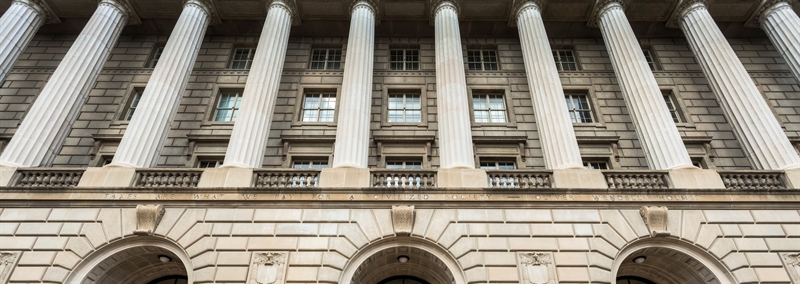
1111 Constitution Avenue
TIGTA Outlines Effects on OBBBA Implementation in Annual Report: On Oct. 27, the Treasury Inspector General for Tax Administration (TIGTA) released its annual report. In the report, TIGTA identified workforce cuts, tax law changes, outdated technology and operational inefficiencies as the Internal Revenue Service’s (IRS) most significant challenges. TIGTA noted the Trump administration’s reduction of the IRS workforce by 25% between January and May 2025, leaving about 77,000 employees and straining the agency’s capacity to implement the One Big Beautiful Bill Act (OBBBA) and modernize its systems. Acting Inspector General Heather Hill warned that the loss of skilled personnel risks data security and the agency’s ability to enforce tax laws, although she noted that the IRS’ experience with major policy rollouts and its increasing use of artificial intelligence could mitigate some difficulties. The report added that recent exemptions from the federal hiring freeze would help bolster customer service staffing ahead of the 2026 filing season.
IRS Releases Fact Sheet on OBBBA Changes to the ERC: On Oct. 22, the Internal Revenue Service (IRS) issued Fact Sheet FS-2025-07 providing FAQs about the One Big Beautiful Bill Act’s (OBBBA) enforcement limits on Employee Retention Credit (ERC) claims for the third and fourth quarters of 2021. The fact sheet clarifies that under section 70605(d) of the OBBBA, the IRS may not allow or refund ERC claims filed after Jan. 31, 2024. Timely filed claims, or those refunded before that date, are not affected, while amended returns withdrawing ERC claims may still be processed. Taxpayers may appeal a disallowance if they believe a timely claim was wrongly rejected.
IRS Releases Fact Sheet on 1099-K Reporting: On Oct. 23, the Internal Revenue Service (IRS) issued updated FAQs in Fact Sheet FS-2025-8 explaining the One Big Beautiful Bill Act’s (OBBBA) revisions to Form 1099-K reporting rules for online marketplaces and payment apps such as PayPal, Uber and Venmo. The guidance notes that the OBBBA reinstated the pre-2021 threshold, requiring payment processors to issue a Form 1099-K to taxpayers with more than 200 transactions totaling over $20,000 annually, superseding the $600 threshold from the American Rescue Plan Act, which had been delayed multiple times. The FAQs also clarify how to handle multiple or incorrect Form 1099-Ks and reporting relating to President Trump’s Executive Order 14254 on curbing tax evasion in the live entertainment ticket resale market.
IRS to Issue Proposed Regulations on Sourcing for Securities-Loan Fees: On Oct. 23, the Treasury Department and the Internal Revenue Service (IRS) issued Notice 2025-63 announcing the intent to issue proposed regulations clarifying how to determine the source of “borrow fees” arising from securities-lending and sale-repurchase transactions. The forthcoming rules will specify that these fees are sourced based on the recipient’s residence, filling a gap in current law and regulations that fail to address the issue. The proposed regulations will cover both borrow fees involving noncash collateral and “negative rebates” that occur when cash collateral is posted. Under the notice, taxpayers may rely on the forthcoming rules for relevant transactions entered into before the proposed regulations are formally issued.
Senate Finance Democrats Investigate Reports of ‘Politicization of the IRS’: On Oct. 22, Senate Finance Committee Democrats, including Minority Leader Chuck Schumer (D-NY), sent a letter to Acting Internal Revenue Service (IRS) Commissioner Scott Bessent and Deputy Chief of the IRS Criminal Investigation (IRS-CI) Division Gary Shapley condemning what they described as President Trump’s politicization of the IRS. They demanded detailed information by Nov. 4 about changes to IRS-CI’s structure, personnel moves, any lists of targeted groups, related legal consultations, and assurances of cooperation with oversight investigations. The senators also questioned the use of certain reports to justify targeting and called on Secretary Bessent to recuse himself from matters involving George Soros due to personal conflicts of interest. The letter warns that IRS-CI must not be turned into a political tool. In response to the reports, SFC Chairman Crapo stated he was unaware of any such actions and emphasized that he would not support using the IRS for partisan purposes.

Tax Worldview
French Government Votes in Favor of Increasing Taxes on American Tech Companies: Last week, French lawmakers approved an amendment to the country’s 2026 budget that would significantly increase the digital services tax (DST) on tech giants from 3% to 15%. The amendment includes protections for smaller companies by increasing the global revenue threshold from €750 million to €2 billion, leaving the tax largely targeting U.S. technology companies that operate in France and globally. The French Constitutional Council is expected to review the legality of the DST amid legal challenges from affected companies, including Airbnb and Digital Classifieds France, which argue it breaches principles of equality before the law.
In response, House Ways and Means Chairman Jason Smith (R-MO) issued a statement criticizing the proposal and calling it an unjustified attack on American technology companies. He warned that such an action would leave Congress and the Trump administration no choice but to consider aggressive retaliation. Chairman Smith added that if France proceeds with the proposed fivefold tax increase, the committee will coordinate with President Trump to respond in line with the “America First” trade agenda.
OBBBA International Tax Guidance Expected by Year-End Despite Shutdown: Speaking at a conference last week, Assistant Secretary for Tax Policy and Acting IRS Chief Counsel Ken Kies confirmed that notices implementing recent international tax changes under the One Big Beautiful Bill Act (OBBBA) will be released before year-end. The guidance is expected to address provisions effective for 2025, including changes to the one-month deferral election under section 898(c), new rules on foreign-derived deduction-eligible income and gains from outbound transfers of intellectual or depreciable property.
EU Members Allowed to Delay Minimum Tax Changes If Notice Is Issued: Speaking at a conference last week, Benjamin Angel, director of treasury and financial operations at the European Commission, explained that the European Union (EU) may allow member countries to delay temporarily the implementation of the global minimum tax rules, especially with respect to U.S. companies. To do so, the EU must issue a formal notification signaling upcoming changes, which he explained has direct legal effect under EU law. The notification would enable EU tax authorities to suspend the minimum tax while local-law changes are made to implement an anticipated agreement to allow U.S. international tax law to coexist side by side with the Pillar Two tax regime, a key demand of the Trump administration.
In the ongoing negotiations with the Organisation for Economic Co-operation and Development (OECD), reports suggest that the United States may be willing to yield first taxing rights in foreign jurisdictions with a qualified domestic minimum top-up tax in exchange for the “side-by-side” framework put forward by the Trump administration. Negotiators have yet to finalize criteria for determining which countries, beyond the United States, may qualify for the “side-by-side” exemption.
Hearings and Events
House Ways and Means Committee
The House is out of session this week.
Senate Finance Committee
The Senate Finance Committee does not have any tax hearings scheduled for next week.